
How to recover from burnout feels impossible when you’re still inside it. Every morning starts with a tired you can’t sleep off. Every “just push through” tip makes you want to throw your phone across the room. At ETEO Wellness — Ava, the goal is to help you find your way back to yourself without needing a sabbatical, a complete life overhaul, or an ounce of willpower you don’t currently have. By the time you finish reading, you’ll have one real first step. Not a list of 47 habits. Not a vision board. Just one honest place to start.
This article helps you:
- Understand exactly what burnout is doing to your body and brain — so you stop blaming yourself
- Identify which stage of burnout you’re actually in right now
- Learn the one nervous system reset that costs nothing and takes under five minutes
- Know the most common mistake that keeps burnout going months longer than it should
- Walk away with a real, doable next step — even if you still have to show up to work tomorrow
Table of Contents
- 01 What is burnout actually doing to your body — and why can’t you just “rest it off”?
- 02 How do you know which stage of burnout you’re in?
- 03 What actually works when you’re trying to recover from burnout but still have to function?
- 04 What’s the biggest mistake that keeps burnout going?
- 05 How long does it realistically take to recover from burnout?
- 06 Frequently asked questions about burnout recovery
What is burnout actually doing to your body — and why can’t you just “rest it off”?
Quick answer: Burnout is a state of chronic stress that has moved past exhaustion into physiological dysregulation. Your nervous system, hormones, and cognitive function are all genuinely impaired — not just “tired.” A weekend off doesn’t fix the underlying pattern because the nervous system learns stress as a default setting, and unlearning that takes consistent, small inputs over time.
Picture this: it’s 3 p.m. on a Tuesday. You’ve had coffee. You slept seven hours. By every measurable metric, you should be fine. But your brain feels like it’s buffering, your chest is tight, and the thought of answering one more message makes you want to cry in the bathroom.
That’s not weakness. That’s burnout — and it has a biological explanation.
The World Health Organization formally recognized burnout in the ICD-11 as an occupational phenomenon resulting from “chronic workplace stress that has not been successfully managed,” showing up as exhaustion, mental distance from work, and reduced effectiveness (according to WHO, 2019). But the clinical definition misses something: burnout doesn’t stay at your desk. It follows you home, into your body, and into the parts of your life that have nothing to do with your job.
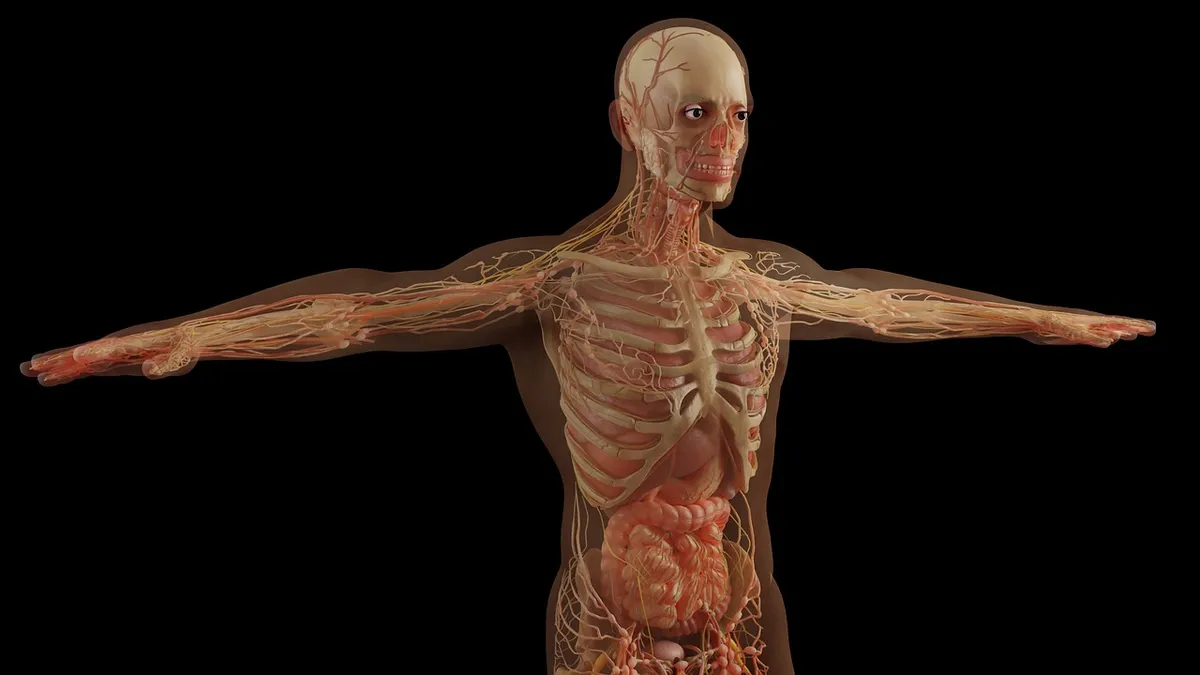
When your body runs on stress hormones — primarily cortisol — for months without real recovery, several things happen at once. Your prefrontal cortex (the part responsible for decision-making and emotional regulation) becomes less efficient. Sleep quality drops even when you’re horizontal for eight hours. Your digestive system slows. Immune function dips. Research in psychoneuroimmunology consistently links prolonged chronic stress to measurable immune suppression, though individual timelines vary depending on baseline health and life circumstances.
Translated to real life: that’s why you can sleep and still wake up exhausted. That’s why you space out mid-sentence. That’s why food that used to feel good now feels like nothing. Your body redirected all available energy to the survival response. It simply has nothing left for “thriving.”
Science corner: The HPA axis (hypothalamic-pituitary-adrenal axis) is your body’s central stress response system. According to Simply Psychology’s overview of chronic stress physiology, repeated activation without adequate recovery can shift your body’s cortisol baseline — which affects energy, mood, and cognitive clarity over time (Simply Psychology, stress response research).
Here’s the part that matters most: a weekend or even a two-week vacation doesn’t reset this. The nervous system learns patterns. It takes consistent, low-level inputs over time — not one dramatic break — to shift the baseline. That’s why so many people come back from time off feeling almost exactly the same by Wednesday. You didn’t fail at resting. The approach just doesn’t match the actual problem.
So before talking about burnout symptoms you might be ignoring, it’s worth getting honest about what you’re actually recovering from. This isn’t a motivation problem. It’s a biology problem — and biology responds to tiny, consistent signals, not willpower sprints.
How do you know which stage of burnout you’re in?

Quick answer: Burnout exists on a spectrum — from early warning signs to full collapse. Knowing where you are on that spectrum matters because what helps someone at Stage 2 can backfire for someone at Stage 4. Most generic recovery advice skips this distinction entirely, which is one reason it doesn’t work.
Let me ask you something honestly. When you imagined burnout before you were in it, did you picture someone dramatically quitting their job and lying on a couch for weeks? The reality is usually quieter. More like a slow leak than a blowout.
Think about someone who’s been running on empty for eight months. She’s not crying at her desk (well, not often). She shows up. She delivers. But she can’t remember the last time she felt genuinely excited about anything. She’s irritable in a way she hates. The hobbies she used to love feel like chores she’s added to an already impossible list. She’s not at the “can’t get out of bed” stage — but she’s not okay either.
Because she’s still functioning, she tells herself it doesn’t count as burnout.
It counts.
Psychologist Herbert Freudenberger, who first described burnout in clinical literature in 1974, identified it as a gradual process — not an event. Research building on his work has mapped burnout across several recognizable stages. Understanding which one you’re in shapes what kind of recovery actually helps.
Here’s a simplified way to locate yourself:
The following table breaks down the core differences between early, mid, and late-stage burnout — because knowing where you are changes what comes next:
| Stage | What it feels like | Key signal | What tends to help |
|---|---|---|---|
| Early (Stress overload) | Busier than usual, harder to wind down, starting to skip things you enjoy | Sleep gets lighter; small irritations feel bigger than they should | Boundary-setting, deliberate rest, reduced inputs |
| Mid (Chronic depletion) | Persistent exhaustion, emotional numbness, cynicism creeping in, physical symptoms like headaches or gut issues | You dread things you used to look forward to | Nervous system regulation, reduced cognitive load, meaningful micro-breaks |
| Late (Collapse / Shutdown) | Can’t function in basic ways, depression-adjacent, physical illness, complete detachment | Getting out of bed feels genuinely impossible most days | Professional support first; tiny inputs only — sunlight, water, one gentle walk |
If you’re reading this article and actively researching how to recover from burnout, you’re probably in early-to-mid stage. That’s actually useful information. It means the tools in the next section are accessible to you right now — you don’t need to hit rock bottom first.
If you recognized yourself in the “late stage” column, please don’t try to hustle your way out with a new morning routine. Reach out to a therapist or your doctor first. The recovery steps that follow are most helpful for people who are depleted but still somewhat functional — not for people in clinical crisis. That distinction matters.
Wondering if your burnout has crossed into emotional burnout where everything feels numb? That’s a different layer worth understanding on its own.
What actually works when you’re trying to recover from burnout but still have to function?

Quick answer: To recover from burnout when you can’t take time off, prioritize reducing your nervous system’s “threat load” through small, consistent inputs — not dramatic life changes. Three areas give the most return for the least effort: sleep quality (not just quantity), one form of daily sensory regulation, and cutting micro-decisions wherever possible.
Right now, you’re probably thinking: “This sounds good, but I still have to show up tomorrow. I can’t take a month off. I have a boss, a rent check, maybe kids. So what do I actually do?”
That’s the real question. Most wellness content answers for someone with unlimited time and no financial stress. That’s not most of us.
Here are the steps that moved the needle during my own recovery — and keep working for others carrying full lives while dealing with burnout:
- Stop trying to “optimize” your rest — protect one sleep input instead
- Add one sensory anchor to your morning (cold water on your face counts)
- Identify your single highest-drain activity and shrink it by 20%
- Eat something protein-based within 90 minutes of waking
- Find your one “non-negotiable nothing” — 10 minutes daily with zero output required
Stop trying to optimize rest — protect one input instead
The exhausting part of “improving your sleep” is that there are 40 things you’re supposed to do. That mental load makes everything worse. So pick one. The most research-supported, lowest-effort option is a consistent wake time. According to ACE Fitness’s overview of sleep and stress physiology, anchoring your wake time — even on weekends — helps stabilize your cortisol rhythm faster than almost any other single change (ACE Fitness, chronic stress and recovery). Set one alarm. Same time. Every day. That’s it for now.
Add one sensory anchor to your morning
A “sensory anchor” sounds fancy. It isn’t. It means giving your nervous system a concrete, physical signal that you’re safe before the day starts throwing inputs at you. Cold water on your face. Bare feet on the floor. Two minutes standing outside. Something your senses register immediately. The goal is one moment of “I’m here, I’m okay” before the notifications hit.
This works because your nervous system processes sensory input faster than cognitive input. You can’t think your way calm — but you can sometimes feel your way there. That’s not a metaphor. It’s how the stress response actually works.
Find your single highest-drain activity and shrink it by 20%
You probably know instantly what this is. The meeting that leaves you hollow. The group chat that never stops. The task you dread from the moment you wake up. You don’t have to eliminate it. Shrinking it by 20% — one fewer hour, one fewer day, one fewer person copied on the email thread — is enough to start reducing your overall stress load. Small friction reduction compounds faster than you’d expect.
Eat something protein-based within 90 minutes of waking
Blood sugar instability amplifies anxiety and mental fog significantly. During burnout, many people skip breakfast or run on caffeine until noon — which keeps cortisol spiked and makes every cognitive task feel harder than it is. A protein source (eggs, Greek yogurt, a handful of nuts, even a protein shake) within that first 90-minute window helps stabilize blood glucose and reduces the mid-morning crash.
This was one of the lowest-effort, highest-return changes I made personally. The shift in afternoon mental clarity showed up within about a week. I was surprised it worked that fast.
Protect your one “non-negotiable nothing”
Ten minutes where you produce nothing, optimize nothing, and respond to nothing. Not a meditation app. Not a podcast. Actual idle time. Sit. Look out a window. Let your mind drift. This feels uncomfortable at first — almost guilty — because you’ve trained yourself to equate stillness with falling behind.
But idle mind-wandering is when your brain consolidates information, processes emotion, and begins downregulating the stress response. Research on default mode network activity (the brain’s “rest state”) consistently shows this matters for mental health. Guard those ten minutes the same way you’d guard a meeting with your boss.
Ava Bennett’s personal note: The step I resisted longest was the “nothing” time. Cold water on my face I could do. But sitting without doing anything felt like failing. What nobody told me: the discomfort you feel during idle time in early recovery is the sound of your nervous system starting to shift gears. It’s supposed to feel strange at first. I sat outside for ten minutes every morning for six weeks before it stopped feeling like I was wasting time. By week eight, it was the part of my day I protected hardest.
If you’re carrying all of this while still going to work every day, five specific things that helped me recover from burnout without quitting my job go deeper into the boundaries and structural changes that make recovery sustainable longer-term.
Want a clear, step-by-step recovery roadmap?
Ava Bennett built ETEO Wellness — Ava for exactly this moment: when you know something needs to change but you’re too depleted to figure out where to start.
What’s the biggest mistake that keeps burnout going?
Quick answer: The biggest mistake people make when trying to recover from burnout is treating rest as a reward for productivity — which means real rest never arrives. Recovery requires rest as a non-negotiable input, not something you earn after finishing everything on your list. That single mindset shift changes the whole equation.
This is the one that kept me stuck for almost a year. I’d tell myself: finish the project, then rest. Catch up on emails, then rest. Clear the backlog, then rest. The backlog never cleared. Rest never came. And the more depleted I got, the less productive I was — so the list grew faster than I could shrink it. The cycle is a trap. The only exit is to break the logic entirely: rest gets scheduled first, not rewarded after.
Scrolling for three hours feels like rest. For your nervous system, it isn’t. Passive consumption keeps your brain in a mild activation state — novelty-seeking, emotionally processing, comparison-triggering — while blocking the actual downregulation your stress response needs. This doesn’t mean you should feel guilty for watching TV. But if your entire “rest” is screen-based and you still wake up exhausted, that’s likely a contributing reason.
One hour of genuine low-stimulation activity — walking without headphones, cooking something simple, sitting with a physical book — does more neurological repair than four hours of doomscrolling. That’s not a judgment. It’s just a useful trade.
Someone tells you burnout recovery means cold plunges, journaling, adaptogens, therapy, yoga, a new morning routine, cutting sugar, and getting outside daily. So you try to add all of it to an already overloaded life. The recovery plan itself becomes a source of stress. That’s not recovery. That’s just a different kind of hustle.
The real move is subtraction first. What can you stop doing, stop attending, stop producing? Create space before you fill it. The additions — if any — come later, once you have some baseline capacity back.
Reading this, you might be thinking: “But this still sounds like advice that requires time and flexibility I genuinely don’t have.” Fair. Learning how to recover from burnout when you can’t take a break is genuinely harder. The steps above are calibrated for that reality. They’re designed to slot into an existing life, not replace it.
For those managing burnout while also carrying care responsibilities — when you’re the person everyone else leans on — recovering from burnout when you can’t stop giving to everyone else addresses that specific exhaustion directly.
How long does it realistically take to recover from burnout?
Quick answer: Burnout recovery typically takes anywhere from several weeks to well over a year, depending on how long the burnout has been building and what structural changes become possible. Early-stage burnout can shift meaningfully in six to eight weeks with consistent inputs. Late-stage burnout with long duration may take twelve to twenty-four months — and that’s not failure, that’s biology doing its job.
Here’s the honest answer nobody wants to give: there’s no universal timeline. And the “eleven days on a beach” version you’ve seen on Instagram is — to put it kindly — not based in reality for most people.
What available research and lived experience suggest is a rough range. Early-stage burnout with relatively recent onset responds faster. If you’ve been at this for a few months and make consistent changes, you can feel meaningfully different in six to twelve weeks. Not back to your “old self” necessarily — but lighter, less reactive, more able to enjoy small things again.
Chronic burnout — the kind that’s been building for a year or more, layered with anxiety, identity stress, financial pressure, or ongoing health issues — takes longer. Sometimes much longer. Twelve months to two years isn’t unusual, and some people describe it as a genuine rebuilding process. That number might feel discouraging. Here’s the reframe, though: you’re not waiting two years to feel better. You’re making small changes now that compound over that period.
Most people notice the first meaningful shift — a morning that doesn’t feel like dread, one afternoon of genuine calm — within the first few weeks of consistent practice. The timeline to full recovery is long. The timeline to “noticeably better” is much shorter. Those are two different destinations, and the second one arrives first.
The variable that influences this most isn’t willpower or discipline. It’s whether the structural stressors are still fully active. Someone who can reduce their workload meaningfully will recover faster than someone carrying the exact same load with no relief. That’s not a character judgment — it’s just how stress physiology works. If you’re in the second group, how to recover from burnout without quitting your job is specifically for navigating that gap.
For a more detailed look at what different recovery windows actually look like, how long burnout recovery really takes goes deeper into the factors that speed it up or slow it down — with honest context about what you can and can’t control.
Key points to remember:
- Burnout recovery has no fixed timeline — early-stage typically shifts in 6–12 weeks; chronic burnout may take 12–24 months
- The first signs of improvement usually arrive within a few weeks of consistent low-level inputs
- Active structural stressors (unreduced workload, financial pressure, caregiving demands) extend recovery — not because you’re doing it wrong, but because the stressor is still present
- Recovery isn’t linear — good weeks followed by hard weeks are normal, not regression
- Comparing your timeline to someone else’s is actively counterproductive and worth dropping entirely
And if your burnout has escalated to the point where basic functioning feels compromised, recovering from severe burnout step by step offers a more structured approach for that level of depletion.
Frequently asked questions about burnout recovery

Quick answer: The most common questions about burnout recovery cluster around time, effort, and whether change is possible without dramatically restructuring your life. The honest answer to most of them: yes, recovery is possible without quitting, without unlimited time, and without expensive interventions — but it requires consistency over weeks, not intensity over a single weekend.
Can you recover from burnout while still working full time?
Yes — and most people have to. The key is reducing your nervous system’s “threat load” incrementally rather than waiting for a break that may not come. Protect sleep, shrink your single highest-drain commitment, and create at least one non-productive window daily. Recovery while working is slower, but it’s absolutely possible. A lot of people are doing exactly that right now.
I don’t know how to recover from burnout — where do I even start?
Start with sleep time, not sleep quality. Pick one consistent wake time and hold it for two weeks before adding anything else. That single anchor does more to stabilize your stress hormones than almost any other first step. After the first few days, it requires no willpower at all — you’ve just set an alarm.
How do I recover from burnout when I can’t take time off?
Work with what you actually have. Five-minute inputs — bare feet on grass, cold water on your face, sitting outside during lunch — are real inputs, not consolation prizes. Your nervous system doesn’t require hours to respond to a calming signal. It requires consistency. Five deliberate minutes daily beats one “perfect” rest day a month, every time, without exception.
Is burnout the same as depression — and does that change how I recover?
Burnout and depression share symptoms — exhaustion, loss of interest, difficulty concentrating — but they’re not the same diagnosis. Burnout is typically context-specific (linked to chronic overload) and tends to improve when the load changes. Depression is broader and often requires clinical treatment. They can co-exist. If you’re unsure which you’re dealing with, speak to a doctor or therapist. Treating only one while missing the other stalls recovery significantly.
What if I try everything and still don’t feel better?
Then the structural stressor — the actual source of chronic overload — likely hasn’t changed enough. More self-care doesn’t neutralize a genuinely toxic work environment or an unsustainable caregiving situation. If you’ve been consistent with recovery inputs for 8–12 weeks and feel no meaningful change, that’s important information. The situation itself may need to change, not just your approach to coping with it. That’s worth talking through with a professional who can help you assess the full picture.
Ready to stop guessing and start with one real step?
ETEO Wellness — Ava was built for women who are exhausted by the hustle and done with advice that doesn’t fit their actual life. No perfection required.
References
Important note: Everyone’s circumstances are different. The steps in this article reflect personal experience and general wellness research — not medical advice. If you’re experiencing symptoms of clinical depression, severe anxiety, or physical illness alongside burnout, please consult a qualified healthcare provider before making changes to your routine. This content is not a substitute for professional mental health or medical care.