
How to recover from emotional burnout starts with one uncomfortable truth: you can do everything right — the early mornings, the green smoothies, the side hustles — and still wake up feeling like an empty shell. That’s not a willpower problem. That’s your nervous system waving a white flag. At ETEO Wellness — Ava, the goal is to help you feel like yourself again without adding another impossible thing to your already-too-long list. By the time you finish reading, you’ll have a clear, honest map of what emotional burnout actually is, why everything feels numb right now, and the first real steps that helped Ava Bennett crawl out of it. No expensive retreats. No hustle mindset required. This guide covers the 7 most honest, grounded steps for how to recover from emotional burnout when you’re running on empty.
This article will help you:
- Understand why emotional burnout makes everything feel numb — not just “tired”
- Spot the research-backed signs you’re in burnout vs. regular stress
- Avoid the three recovery mistakes that keep most people stuck for months
- Get a first, genuinely doable step you can take today without quitting your job or spending money
- Know exactly when burnout crosses into something that needs professional support
Article Contents
- 01 What Is Emotional Burnout — and Why Does Everything Feel Numb?
- 02 Why Does Emotional Burnout Hit Women in Their 20s and 30s So Much Harder?
- 03 Why Does Your Nervous System Shut Down During Burnout?
- 04 What Are the Biggest Mistakes People Make When Trying to Recover from Burnout?
- 05 How to Actually Start Recovering from Emotional Burnout — Step by Step
- 06 Frequently Asked Questions About Recovering from Emotional Burnout
What Is Emotional Burnout — and Why Does Everything Feel Numb?

What is emotional burnout? Emotional burnout is a state of deep depletion where your capacity to feel, care, or respond has been stretched past its limit for too long. It goes beyond tiredness — it produces emotional numbness, detachment, and a loss of meaning that rest alone cannot fix. Understanding this distinction is the essential first step in knowing how to recover from emotional burnout.
You’re not lazy. You’re not ungrateful. You’re not “just stressed.” The numbness you’re feeling right now has a name, and it’s not a character flaw.
According to the World Health Organization, burnout is an occupational phenomenon characterized by three dimensions: exhaustion, increasing mental distance or cynicism, and reduced professional efficacy (WHO, 2019). That clinical framing, though, misses something important for women navigating life right now. Burnout doesn’t stay at work. It bleeds into your relationships, your body, your ability to feel joy on a Sunday morning.
Emotional burnout, specifically, is what happens when your emotional resources run completely dry. Those reserves — the ones you use to care for others, show up at work, manage anxiety, and simply feel things — hit zero. So the numbness isn’t emptiness in the philosophical sense. It’s a protection mechanism.
Your brain stops generating emotional responses because generating them costs energy you no longer have.
Think of it like this: your emotional capacity is a battery. Normal stress drains it. Rest recharges it. But chronic stress — the kind that lives in your chest at 2 a.m. — drains it faster than any amount of sleep can restore it. Eventually, the battery stops holding a charge at all. That’s the numb phase.
What makes emotional burnout different from regular exhaustion is that exhaustion responds to sleep. Burnout does not. You can sleep nine hours and still wake up feeling like you haven’t rested in weeks. Many women describe it as watching their own life from behind glass — present but not there.
From Ava Bennett: The moment I knew I was in emotional burnout wasn’t a dramatic breakdown. It was a Tuesday afternoon when my best friend called with genuinely exciting news, and I felt nothing. Not happiness, not envy, not even mild interest. Just a flat silence where a feeling should have been. That scared me more than any anxiety spike ever had.
The numbness is the body’s last resort. It’s telling you something your calendar is ignoring: you need more than a vacation. You need a different relationship with your own nervous system. That’s exactly what the rest of this guide covers — starting with why this hits so many women in their 20s and 30s so disproportionately hard.
Why Does Emotional Burnout Hit Women in Their 20s and 30s So Much Harder?

Why women in their 20s–30s burn out faster: Women in this age bracket face a compounding load — career pressure, financial precarity, unpaid emotional labor at home and at work, and the social expectation to look well while falling apart. Generic “self-care” advice almost never addresses this specific combination, which is why it rarely works.
Imagine you’re doing everything you were told would work. You’re disciplined. You meal prep. You meditate — sometimes. You reply to emails at 11 p.m. because that’s what being professional looks like.
And yet, by Thursday of every week, you’re running on borrowed energy and quietly wondering if something is fundamentally wrong with you.
Nothing is wrong with you. The system is just genuinely expensive to run.
Research from the Global Wellness Institute highlights that emotional depletion is not evenly distributed — women, particularly those in the 25–35 bracket, carry a disproportionate share of emotional labor both at work and at home (Global Wellness Institute, 2023). That means you’re managing not just your own emotions but often the emotional states of colleagues, partners, family members, and the group chat.
Add the cost-of-living pressure — which has left many women in this age group feeling financially precarious even when they’re technically earning more than they ever have — and you have a burnout pressure cooker. Financial stress activates the same threat-response systems as physical danger. Your nervous system cannot distinguish between “I might get fired” and “I might get eaten.” Both trigger the same cortisol cascade.
Then there’s the social layer. Instagram and TikTok show you two contradictory ideals at the same time: the hyper-productive CEO morning routine and the soft, slow, intentional life. Neither is fully real. Both make you feel like you’re failing at whichever one you’re not currently doing.
Recovering from emotional burnout when you still have to work, pay rent, and show up for everyone else is genuinely harder. You don’t have the luxury of a six-week sabbatical. So the recovery approach has to fit a real life — which is exactly what the sections ahead are built around.
First, though, you need to understand what’s actually happening inside your body when everything goes numb. Because until you get that part, the standard advice will keep bouncing off.
If any of this sounds like you, the guide on recovering from burnout when you can’t stop giving to everyone else goes deeper on the emotional labor piece specifically.
Why Does Your Nervous System Shut Down During Burnout?
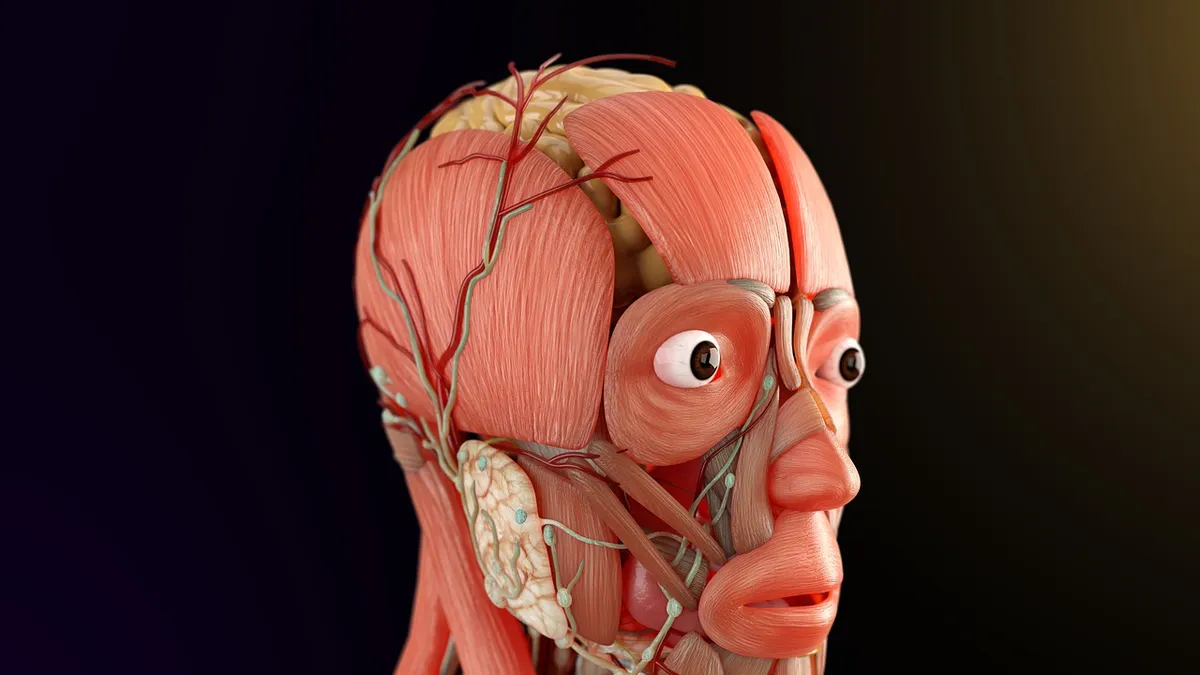
The nervous system shutdown explained: Chronic stress keeps the body’s threat-response system — the HPA axis — activated for too long. Over time, this depletes cortisol regulation, suppresses the brain’s ability to process emotion, and drives the nervous system into a freeze state. That freeze state is why emotional burnout feels like numbness rather than anxiety.
Here’s something most burnout articles skip because it sounds too technical. Stick with it — understanding this changed everything for Ava Bennett’s own recovery, and it’ll shift how you approach yours.
Your nervous system has two main modes for threat response: fight-or-flight (sympathetic activation) and freeze (dorsal vagal shutdown). Most people know about fight-or-flight — the racing heart, the shallow breathing, the inability to sit still. Fewer people talk about the freeze state. That’s what prolonged burnout actually looks like.
When the threat-response system — technically the hypothalamic-pituitary-adrenal axis, or HPA axis — stays activated for months or years, it exhausts its own feedback loops. According to Simply Psychology’s review of stress physiology, chronic HPA axis dysregulation leads to blunted cortisol responses, meaning the body stops producing adequate stress hormones even when it needs to (Simply Psychology, 2023). Paradoxically, that produces symptoms of numbness, fatigue, and emotional flatness.
Translation: your body has been running its alarm system on full blast for so long that the alarm broke. That flat, gray, can’t-feel-anything sensation isn’t weakness. It’s your nervous system going offline to protect itself.
The science corner: The dorsal vagal freeze state — described in Polyvagal Theory by researcher Stephen Porges (1994) — is an ancient survival mechanism. When the nervous system concludes that fighting or fleeing isn’t possible, it shuts down non-essential functions, including emotional processing. That’s why you can sit in a meeting, look completely fine, and feel absolutely nothing. Your system has decided that “nothing” is safer than feeling everything at once.
Why does this matter for how to recover from emotional burnout? Because you cannot think your way out of it. You can’t journal your way out, productivity-hack your way out, or willpower your way out.
The nervous system doesn’t respond to logic. It responds to signals of safety — physical, relational, sensory signals that say “the threat is over.”
That’s the core insight. Recovery from emotional burnout is fundamentally about nervous system regulation first, and behavioral change second. Not the other way around.
This is also why the standard advice — “take a break,” “practice gratitude,” “exercise more” — often falls flat when you’re deep in it. Those tools work when your nervous system is mildly dysregulated. They bounce off when you’re in freeze. The best burnout recovery approach is one that starts with your body, not your schedule.
For a step-by-step approach built around this physiology, the full guide to recovering from severe burnout step by step lays out the exact sequence that accounts for where your nervous system actually is right now.
What Are the Biggest Mistakes People Make When Trying to Recover from Burnout?

The three burnout recovery mistakes: Treating rest as a reward to be earned, trying to fix burnout with the same productivity mindset that caused it, and skipping nervous system regulation to jump straight to behavioral change. All three slow recovery significantly — and all three are extremely common among high-achieving women.
Reading this far, you might be thinking: okay, but I’ve tried resting and I still feel terrible. That’s not a failure of effort. That’s usually one of three specific mistakes getting in the way.
The same brain that burned out trying to be productive is now trying to recover productively. Scheduling “self-care,” tracking sleep scores obsessively, researching the perfect supplement protocol — all of this keeps your nervous system in a low-grade performance mode. Real recovery requires genuine unstructured downtime, not optimized rest.
Motivation is a byproduct of action, not a prerequisite for it. When you’re in emotional burnout, waiting to feel like doing something means waiting indefinitely. The nervous system needs micro-inputs of safety first — tiny, low-stakes actions that signal “it’s okay to come back online” — before motivation returns. Waiting for it to arrive on its own rarely works.
This one is sneaky. When everything feels numb, being around people feels like performing. So you cancel plans, stop texting back, go quiet. However, co-regulation — the nervous system’s ability to calm itself in the presence of a safe person — is one of the fastest routes out of freeze. Isolation extends the freeze state. Even low-effort connection, like a five-minute voice note to a friend, keeps the window cracked.
Here’s the one Ava Bennett spent the longest on: the productivity trap. The first few times she tried to recover from emotional burnout, she turned recovery into a self-improvement project. New morning routine. Habit tracker. Three wellness apps running simultaneously. By week two, she was exhausted by her own recovery plan.
What actually worked was doing embarrassingly little. A ten-minute walk without a podcast. Lunch away from the laptop. One evening a week with nothing scheduled.
Not because those things are magic. Because they gave her nervous system the message: you don’t have to perform right now.
If you’re recovering from burnout while still working and can’t take time off, the specific guide on recovering from burnout at work without blowing up your career covers how to create those micro-recovery windows without compromising your job.
Not sure where your burnout sits on the severity scale?
ETEO Wellness — Ava breaks down the full spectrum from early warning signs to severe depletion, so you can start at the right level — not just the beginning.
How to Actually Start Recovering from Emotional Burnout — Step by Step

How to recover from emotional burnout — the sequence: First, create physical and sensory safety signals for your nervous system. Second, reduce your demand load without waiting for permission. Third, reintroduce micro-doses of meaning before attempting full behavioral change. Skipping step one makes steps two and three nearly impossible to sustain — this order matters.
So what does recovery actually look like when you still have rent, a job, and people who need things from you? Honest answer: it looks smaller than you think it should. That’s not a bug. That’s the point.
Below is the sequence that came out of Ava Bennett’s own years-long recovery from severe burnout, alongside what the research on nervous system regulation supports. These are not a 30-day transformation plan. They’re the 7 first steps that actually work when you start from numb.
- Identify one physical safety signal and use it daily
- Audit your single biggest energy drain — and reduce it by one notch
- Add one micro-dose of sensory pleasure (not productivity) per day
- Reintroduce low-stakes social contact before full re-engagement
- Create a non-negotiable “permission to stop” cue each evening
- Revisit what actually matters to you — after at least two weeks of the above
- Track your nervous system state, not your productivity output
Identify one physical safety signal and use it daily
Your nervous system learns safety through the body, not the mind. A safety signal is anything physical that reliably tells your system “threat is not present right now.” For Ava Bennett, it was cold water on her face before opening her phone. For you, it might be a specific song that predates your burnout, or five slow exhales before you open your inbox.
The key is consistency. One signal, every day, before anything demanding. After two to three weeks, your nervous system begins to associate that cue with a genuine downshift. That downshift is the beginning of real recovery — not the dramatic kind, but the kind that sticks.
Audit your single biggest energy drain and reduce it by one notch
Not eliminate. One notch. This might mean declining one optional meeting per week, setting your work email to “do not disturb” an hour earlier, or saying “let me think about that” instead of immediately saying yes to a request.
Burnout recovery for women who can’t take a break isn’t about a full stop — it’s about micro-reductions that compound. One less drain per week adds up to a meaningfully lighter load within a month. Small shifts in demand matter more than most people expect.
Add one micro-dose of sensory pleasure per day
Not a hobby. Not a wellness practice. Something sensory and genuinely low-effort: a ten-minute sit in actual sunlight, a meal eaten slowly without a screen, a shower that lasts three minutes longer than usual.
The point is to give your body evidence that pleasure still exists. When you’re in the numb phase, the brain has deprioritized reward pathways. Tiny, repeated sensory inputs begin to reactivate them — not dramatically, but measurably, over weeks. That’s enough to start with.
Reintroduce low-stakes social contact before full re-engagement
A voice note instead of a phone call. A walk with one person instead of a dinner party. The goal isn’t socializing for its own sake — it’s co-regulation.
Being physically or vocally near a safe person for even a few minutes gives your nervous system access to an external calming signal it can’t generate on its own right now. Start with whoever requires the least performance from you. Even three minutes counts.
Create a non-negotiable “permission to stop” cue each evening
The nervous system needs a clear signal that the performance portion of the day has ended. This might be changing out of work clothes the moment you get home, making a specific tea, or a two-minute phone-down ritual at a set time.
The actual activity matters less than the consistency. Over time, this cue trains your system to begin recovery mode in the evening rather than staying in low-grade vigilance until sleep. Many women find their sleep quality shifts noticeably within ten to fourteen days of adding this step — without changing anything else.
Revisit what actually matters to you — after at least two weeks
This step comes last for a reason. When you’re in the numb phase, your values and desires are largely inaccessible. The prefrontal cortex — which handles future-oriented thinking and meaning-making — is suppressed under chronic stress.
Trying to figure out your “life purpose” while you’re in burnout is like trying to read a map in the dark. Give your nervous system two weeks of the steps above before you ask any big questions. The answers will be clearer, more honest, and more useful than anything you could have produced from the frozen place.
Track your nervous system state, not your productivity output
Most people measure recovery by how much they got done. That metric keeps you in the same loop that caused the burnout. Instead, notice your nervous system state throughout the day.
Did you feel one moment of genuine calm today? Did one interaction feel slightly easier than last week? Did you catch yourself actually present for a few seconds? These are the real signs of progress when you’re learning how to recover from emotional burnout. Small shifts in state — not output — are the data points that matter here.
From Ava Bennett: The step I resisted most was step six. I wanted to fix my life goals first — to have a reason to recover. But every time I tried to think clearly about what I wanted, I came up with more anxiety. It wasn’t until I’d been doing step one for about three weeks that I sat down one morning and felt, for the first time in a long time, a quiet sense of what I actually cared about. It showed up without me forcing it. That’s not something I could have manufactured earlier. Turns out you can’t think your way back to yourself — you have to feel your way back, slowly.
Recovery from burnout is not linear. There will be weeks when you feel better and then, without warning, feel empty again. That’s normal. It’s not a sign you’ve failed or gone backward — it’s the nervous system recalibrating in waves, not in a straight line. Expect it, and it loses its power to derail you.
If you’ve been in this state for a long time and are wondering whether you need professional support, the FAQ section below addresses that directly.
If your burnout has a specific shape — parental exhaustion, ADHD-related depletion, or the particular grind of full-time work with genuinely no room to breathe — the guide on recovering from burnout with ADHD and the guide for when you don’t even know where to start are the right next reads.
Frequently Asked Questions About Recovering from Emotional Burnout

Recovery timeline for emotional burnout: Recovery typically takes weeks to months depending on severity and ongoing stressors — not days. The most important predictor of timeline is not what you add to your routine, but how much of the original demand load you’re able to reduce while recovering. Mild cases may improve in four to eight weeks; severe, long-term burnout often takes six months or more.
How long does it take to recover from emotional burnout?
There’s no single timeline, and anyone who gives you a precise number is guessing. Mild burnout with a significant reduction in stressors can show noticeable improvement in four to eight weeks. Severe or long-term burnout — the kind where numbness has been present for months — often takes six months to over a year of consistent, low-effort nervous system support. The variable that matters most isn’t what you add to your routine, but how much of the original load you’re able to remove.
Can I recover from burnout without quitting my job or taking extended leave?
Yes — and for most women in their 20s and 30s, that’s the only realistic option. Recovery while still working requires micro-reductions in demand, consistent daily safety signals for the nervous system, and a firm line between work hours and genuine off-time. It’s slower than a sabbatical, but it is real and it works. The full breakdown is in the 5 things that actually helped with burnout recovery without quitting.
Is emotional burnout the same as depression, and how do I know when to see a doctor?
Emotional burnout and depression share symptoms — numbness, fatigue, loss of motivation — but they have different roots. Burnout is typically context-dependent (tied to chronic overload) and tends to improve when that load reduces. Depression is a clinical condition that often requires professional treatment regardless of external circumstances. If your symptoms include persistent hopelessness, inability to experience any pleasure whatsoever, thoughts of self-harm, or no improvement after several weeks of reduced demand, please consult a licensed mental health professional. Ava Bennett is not a medical professional, and nothing in this article replaces clinical care.
Why do I feel worse when I finally rest, like on weekends or vacation?
This is a real phenomenon sometimes called “leisure sickness” — and it makes complete sense neurologically. When your threat-response system has been running constantly, the sudden removal of external demands can trigger a release of suppressed exhaustion and emotion. Your body was waiting for a safe moment to fall apart. Feeling worse when you rest is often a sign you needed that rest badly. It’s uncomfortable, but it’s the beginning of the nervous system releasing held tension — not a setback.
How do I recover from burnout when I have kids and can’t prioritize myself?
The smallest possible unit of recovery works here — literally two to five minutes of unscheduled quiet, a sensory reset, or a single intentional breath before reacting. The goal isn’t an hour of self-care. It’s a micro-signal to your nervous system, repeated many times per day, that you exist outside of your role. Many parents find the guide on recovering from extreme burnout and rebuilding energy most useful because it’s built around zero-available-time scenarios.
Key takeaways — what to remember:
- Emotional burnout produces numbness because the nervous system enters a freeze state to protect itself — not because of weakness or laziness
- Recovery requires nervous system regulation first, behavior change second — not the other way around
- The three biggest recovery mistakes are optimizing rest like a project, waiting for motivation, and isolating during the freeze phase
- Physical safety signals — small, consistent, sensory — are the fastest entry point back to feeling like yourself
- Recovery is nonlinear; a bad week after a good one is recalibration, not failure
- If numbness has been present for months or includes signs of clinical depression, professional support is not optional — it’s the right next step
Ready to take one honest step forward?
ETEO Wellness — Ava is built for women who are tired of advice that doesn’t fit their actual lives — no hustle required, no hype, just the real steps that work when you’re running on empty.
References
Please note: Everyone’s body, circumstances, and mental health history are different. The steps in this article reflect Ava Bennett’s personal recovery experience and general wellness information — they are not a substitute for advice from a qualified mental health professional, physician, or therapist. If you’re experiencing symptoms that feel clinical in nature, please reach out to a licensed provider.