How to recover from burnout as a student mid-semester is one of the hardest things you’ll face — because unlike summer burnout, you genuinely cannot stop. Deadlines don’t care how empty you feel. ETEO Wellness — Ava was built for exactly this moment: when you’re exhausted, behind, and the semester has weeks left to go. By the end of this guide, you’ll have a realistic recovery plan you can start tonight. No gap year. No willpower miracle. Just six honest steps most students never get told about.
This article will help you:
- Understand what’s actually happening in your nervous system when burnout hits mid-semester
- Spot the three recovery-blocking mistakes that keep most students stuck
- Follow a step-by-step daily reset you can plug into your existing schedule starting today
- Manage your energy through high-demand weeks without a complete crash
- Know when burnout is signaling something deeper — and who to reach out to
Article Contents
- 01 What does burnout as a student actually feel like mid-semester?
- 02 Why does student burnout hit harder when you can’t take a break?
- 03 How do you recover from burnout as a student without falling further behind?
- 04 What mistakes are keeping you stuck in the burnout cycle?
- 05 How do you protect your energy when the semester keeps demanding more?
- 06 Frequently asked questions about student burnout recovery
What does burnout as a student actually feel like mid-semester?

Key point: Student burnout mid-semester is physical and emotional exhaustion where even small tasks feel impossible — not because you’re lazy, but because your nervous system has been running on overdrive with no real recovery window. It shows up as apathy, brain fog, and low-grade dread. Not just tiredness.
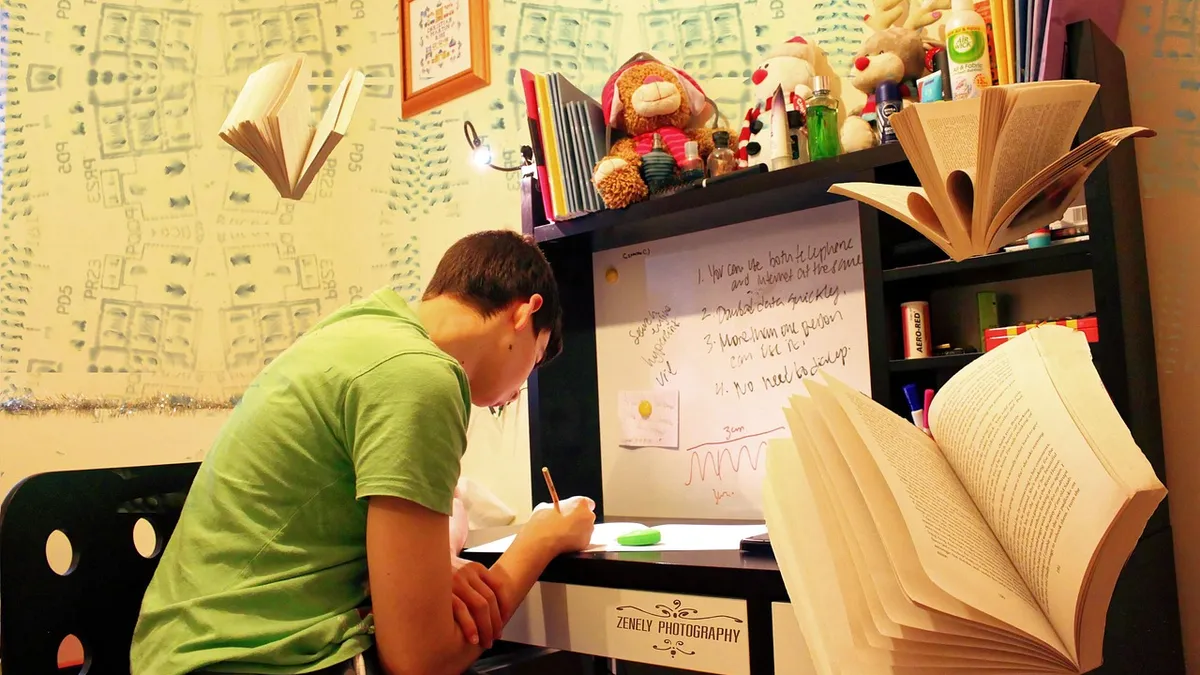
It’s 2 PM on a Tuesday. Your laptop is open. There’s a half-read chapter on screen, and you haven’t processed a single word in the last 20 minutes. You’re not scrolling. You’re not distracted by anything specific. You’re just… gone.
That hollow, staring-at-nothing feeling is one of the clearest signs of how burnout as a student actually lands. It’s different from regular tiredness. Regular tiredness disappears after a good night’s sleep. Burnout, though, sits in your chest on Monday morning even when you slept nine hours straight.
The Global Wellness Institute describes burnout as a state involving emotional exhaustion, depersonalization (feeling detached from your work and your life), and a reduced sense of personal accomplishment. Mid-semester, all three tend to arrive at once. You stop caring about grades you used to care about. Assignments that once felt manageable now feel like climbing a wall in wet socks.
Physically, burnout at school often shows up as headaches that start before your first class. Your jaw is tight by 10 AM. Coffee makes the fatigue worse, not better. Your body isn’t broken. It’s been sending signals for weeks, and mid-semester is usually when those signals get loud enough to ignore.
The cost of pushing through matters more than most people realise. Every week you grind on without addressing the root issue, your ability to retain information drops. Decision-making gets worse. Work you’d normally be proud of starts looking like something you just want to hand in and forget. That’s the real academic price of untreated burnout — not just feeling terrible, but actually performing worse on the things that count.
Here’s what makes mid-semester burnout particularly cruel: you can’t see the finish line yet. Spring break was a month ago. Finals are still weeks out. You’re stranded in the middle, and “just push through” stopped working a while ago. So what’s actually going on inside your body?
A note from Ava Bennett: When mình was deep in burnout, mình kept waiting to “feel motivated again” before doing anything about it. That was the trap. Motivation doesn’t arrive first — small action does. The night mình stopped waiting and just did one tiny thing (closed three browser tabs, drank a glass of water) was the night something shifted. Not because of the water. Because mình stopped treating recovery like it had to feel dramatic to count.
Why does student burnout hit harder when you can’t take a break?
Key point: Student burnout intensifies mid-semester when breaks aren’t available because your nervous system stays locked in chronic stress mode — cortisol stays elevated with no signal to come down, which blocks sleep quality, memory consolidation, and emotional regulation at the same time.
There’s a reason burnout while still enrolled feels different from burnout at a job you can call in sick from. When you’re a student mid-semester, the deadline machine doesn’t pause for your nervous system to catch up. Ever.
Cortisol, your body’s main stress hormone, is designed to spike during a crisis and then drop once the threat passes. The problem is that for many students, the crisis never officially ends. According to the World Health Organization, chronic stress — the kind that runs continuously rather than in short bursts — is linked to impaired cognitive function, disrupted sleep, and a weakened immune response. In plain terms: your brain starts misfiring exactly when you need it most.
Think of your nervous system like a phone battery. A short stress response is a quick drain — you plug in, recharge, and you’re fine. Mid-semester burnout is more like leaving every app running at full brightness for eight weeks with no charger nearby. By the time you notice the battery is at 4%, you’re already in crisis.
What makes this harder for students juggling work, relationships, and financial pressure: the stress load isn’t only academic. Your body doesn’t sort stress by category. “I have an exam” stress and “rent is due” stress and “I haven’t slept properly in three weeks” stress all feed the same system. It compounds. Fast.
Hans Selye’s General Adaptation Syndrome — as explained by Simply Psychology — illustrates this well. After the initial alarm stage and the resistance stage (where you feel like you’re managing), comes exhaustion — where your body’s resources are genuinely gone. Mid-semester burnout is almost always stage three. You’ve been in resistance mode so long there’s nothing left to resist with.
This is also why “just take a weekend off” doesn’t fix it. Two days of rest cannot reverse weeks of accumulated nervous system dysregulation. Recovery requires smaller, more consistent interventions — which is exactly what the next section breaks down step by step.
Burnout during exam season is a related pressure point that deserves its own honest look. If you’re already feeling this way before finals start, read how to recover from burnout during exam season and still pass — it covers the specific overlap of exam pressure and deep exhaustion.
How do you recover from burnout as a student without falling further behind?

Key point: To recover from burnout as a student mid-semester without falling behind, layer micro-interventions into your existing schedule — not a life overhaul. The goal is to reduce nervous system load while keeping academic function intact, using small daily resets rather than waiting for a break that isn’t coming.
What if you could start recovering tonight — not next month, not over spring break, but in the next 24 hours — without dropping a single assignment? Learning how to recover from burnout as a student doesn’t require a dramatic reset. It starts with six small shifts you can plug into what you’re already doing.
Here’s the step-by-step daily reset that actually works mid-semester:
- Audit your energy, not your time
- Protect one non-negotiable recovery anchor each day
- Batch your hardest cognitive work into a single focused block
- Cut one low-value commitment this week without guilt
- Add one physical regulation moment before bed
- Talk to one person about how you actually feel
Audit your energy, not your time
Most burnout advice tells you to reorganize your calendar. Mid-semester, it’s not that you don’t have a schedule — it’s that everything on it drains you. Spend five minutes writing down the three tasks that cost you the most energy this week. Those are your targets. Within 48 hours, most students find at least one they can eliminate, delegate, or significantly shrink. That one thing is your starting point.
Protect one non-negotiable recovery anchor each day
A recovery anchor is a small, predictable moment your nervous system can rely on. It might be a 15-minute walk without headphones, a short nap before your afternoon class, or eating lunch away from your desk. The specifics matter less than the consistency. According to ACE Fitness, even brief physical movement interrupts the cortisol-feedback loop — a 10-minute walk produces measurable physiological effects on stress recovery. Ten minutes. That’s it.
Batch your hardest cognitive work into one focused block
A burned-out brain cannot switch contexts quickly. Every task jump costs you cognitive switching energy you don’t have right now. Pick your sharpest two-hour window — for most people, that’s mid-morning — and protect it for the work that actually requires thinking. Everything else moves to lower-energy slots. You’ll often get more done in that one clean block than in five fragmented hours of stressed multitasking.
Cut one low-value commitment this week
This is the step most people skip because it feels selfish. It isn’t. Burnout is a resource-depletion problem, and you cannot pour from an empty cup. Find the one meeting, group chat, or obligation that costs energy without giving anything back, and decline it. One cancellation per week, done consistently, frees more recovery bandwidth than most supplements or sleep hacks ever will.
Add one physical regulation moment before bed
Not a full yoga routine. Something as small as five slow belly breaths, a brief body scan, or a five-minute stretch activates your parasympathetic nervous system — the “rest and digest” state that counteracts chronic stress activation. Done nightly for one week, most students report falling asleep faster and waking up feeling less wired. Small. Consistent. Real.
Talk to one person about how you actually feel
Not “I’m tired” — most people say that and move on. Actually say: “I’m running on empty and I’m scared I’m falling apart.” Social connection is one of the most underused tools when figuring out how to recover from burnout as a student. Naming what’s happening out loud to someone who genuinely listens lowers perceived stress. It costs nothing, and it works faster than you’d expect.
Science corner: The World Health Organization recognizes burnout as an occupational phenomenon (ICD-11) characterized by exhaustion, negativism toward one’s work, and reduced efficacy. While the ICD-11 classification focuses on occupational contexts, the same three-part pattern appears consistently in academic settings. The WHO’s guidance emphasizes that recovery requires addressing the source of stress — not just managing symptoms.
If the brain fog piece of your burnout feels heaviest — the inability to think clearly, remember things, or string sentences together — that specific pattern has its own recovery pathway. Read how to recover from burnout brain fog so your mind feels clear again for the detailed breakdown.
Want the full burnout recovery roadmap?
Ava Bennett’s honest 8-week plan breaks down exactly how to rebuild your energy without burning your life down first.
What mistakes are keeping you stuck in the burnout cycle?
Key point: The most common mistakes students make when recovering from burnout mid-semester are treating it as a motivation problem, using weekends as the only recovery window, and introducing new productivity systems mid-crisis. All three backfire because they add cognitive load instead of reducing it.
You’ve probably already tried to fix this. So why are you still here? The answer, in most cases, isn’t effort. It’s direction.
Burnout feels like you’ve lost your drive. So the instinct is to hunt for motivation — new planner, new goals, new podcast about discipline. That’s the wrong move. Adding stimulation to an already overwhelmed nervous system is like turning up the volume on a speaker that’s already blown.
Recovery from burnout at school requires reducing inputs, not adding them. You don’t need more motivation right now. You need less demand.
Resting only on weekends while grinding through five consecutive high-stress days is like eating one large meal a week and wondering why you’re always hungry. Your nervous system needs daily regulation signals, not a bi-weekly dump. Two days of rest cannot undo five days of sustained cortisol elevation — the math doesn’t work.
What actually helps: three to five micro-recovery moments distributed across weekdays. For example, a 12-minute walk between classes or a real lunch break without a screen. Small. Repeated. Daily.
Ava Bennett made this one personally. The urge to “finally get organized” hits hardest when you’re most overwhelmed. You download a new app, build a Notion dashboard, spend an evening on a system you abandon by Thursday.
New systems cost cognitive energy to maintain — and that’s the resource you have least of right now. Stick to what you already know until you’re out of the acute phase. Then optimize. Not before.
There’s also a version of this burnout that hits when you genuinely cannot step away from school at all. No gap, no leave, no option to quit. That situation has its own navigation strategies. How to recover from burnout while still working when quitting isn’t an option covers that exact scenario with concrete approaches.
If you’re carrying job burnout on top of school stress, that overlap is real and worth addressing separately. The guide on recovering from burnout without quitting your job — 5 things that helped speaks directly to that dual-pressure situation.
How do you protect your energy when the semester keeps demanding more?
Key point: Protecting your energy mid-semester means building non-negotiable buffers into high-demand weeks before burnout compounds — by sorting tasks by energy cost rather than just time, scheduling physiological resets between obligations, and setting one firm boundary per week to prevent total depletion.
Picture this version of your week: same deadlines as now. But somewhere between your morning class and your afternoon reading, you have 20 minutes outside with your phone in your bag. You eat a real lunch. You say no to one thing on Thursday. On Sunday evening, that specific low-grade dread that’s been following you around? It’s quieter.
That’s not a fantasy. It’s what intentional energy management looks like in practice — and it doesn’t require a perfect schedule or a wellness budget. It’s also one of the most honest answers to how to recover from burnout as a student without quitting everything first.
The table below shows the difference between a reactive week (how most burned-out students operate) and a protected week (what energy-conscious recovery actually looks like). Both carry the same workload.
Here’s a comparison of reactive vs. protected weekly patterns for students recovering from burnout:
| Pattern | Reactive Week | Protected Week |
|---|---|---|
| Morning routine | Alarm snooze x3, phone immediately | 5-minute stretch before checking phone |
| Between classes | Scroll or cram | 10-minute walk outside without headphones |
| Lunch | Eating while reading or studying | One real meal away from the desk |
| Evening | Work until crash, sleep irregular | Stop at a fixed time, brief wind-down |
| Social obligations | Say yes to everything, resent it | One firm no per week |
| Sleep | Irregular, phone in bed | Consistent lights-out time, phone outside room |
None of those changes require extra hours. They require decisions. Burnout thrives in the absence of decisions — the default is always more demand, more input, more screen. Making even one intentional choice per day starts nudging your nervous system out of chronic overdrive.
Here’s something that doesn’t get said enough: if burnout and anxiety are showing up together — the exhaustion and the racing thoughts coexisting — that’s a specific pattern deserving its own attention. The guide on recovering from burnout and chronic stress when your body gives out goes deeper on the physical depletion side of this.
One thing Ava Bennett learned the hard way: recovery at home looks different from recovery in a college environment. At home, you control your surroundings. In a dorm or shared apartment with roommates and shared stress, you build micro-sanctuaries instead. Try 15 minutes in a library corner, headphones in a specific chair, or a bathroom break that’s actually a breathing break. Use what you have.
A note on who this approach is NOT for: if you’re experiencing persistent thoughts of harming yourself, an inability to function in basic daily activities, or symptoms that have lasted several weeks with no improvement at all, please reach out to your campus counseling center or a mental health professional. These strategies are meaningful tools — but they’re not a substitute for clinical care when clinical care is what’s needed.
For the bigger picture on where your burnout fits into a longer recovery arc, the ETEO Wellness — Ava resource hub pulls together the full approach to rebuilding energy, habits, and a life that doesn’t run on empty.
You don’t have to figure this out alone.
Ava Bennett shares what actually worked — the unglamorous, low-effort, real-life version of burnout recovery at ETEO Wellness.
Frequently asked questions about student burnout recovery

Key point: Recovering from burnout as a student mid-semester is possible without taking time off — but it requires honest self-assessment, consistent micro-interventions, and knowing when to ask for academic accommodations or professional support rather than white-knuckling through alone.
How long does it actually take to recover from burnout as a student?
Recovery timelines vary a lot depending on how long the burnout has been building. Mild burnout caught early can shift noticeably within two to three weeks of consistent small changes. More entrenched burnout — the kind accumulating over a full semester or longer — typically takes several months of sustained adjustment. There’s no honest one-size-fits-all number here. Anyone promising a specific timeline without knowing your situation is oversimplifying.
Is it okay to tell my professor I’m burned out?
Yes — and framing matters. Professors respond better to specific requests than vague struggles. Rather than saying “I’m burned out,” try: “I’m experiencing significant fatigue that’s affecting my work and wanted to ask about extension options or accommodations.” Many schools have formal accommodation processes through disability or counseling services that provide documented support without requiring you to justify yourself in a difficult personal conversation.
Can I recover from burnout without taking time off from school?
Many students do recover without taking a leave — especially when burnout is mid-range rather than severe. The key is reducing the total stress load in other areas of life while maintaining academic minimums, rather than pushing to maintain everything at 100%. Academic minimums — submitting the work, showing up to exams — are enough during a recovery phase. Excellence can wait a few weeks.
What’s the difference between burnout and just being tired from school?
Normal academic tiredness improves with sleep and a lighter day. Burnout persists regardless of sleep. It comes with emotional detachment or cynicism toward your studies, and often includes a sense that no amount of rest feels sufficient. Had a full weekend off and still felt dread every Sunday evening? That pattern leans toward burnout rather than ordinary fatigue.
Should I drop a class if I’m burned out mid-semester?
Dropping a class can be the right call — but check the withdrawal deadline and financial implications first, because the stress of academic consequences can compound the problem rather than solve it. If the class driving the most burnout isn’t required for your degree or can be retaken, dropping it is worth serious consideration. If every class feels equally impossible, though, the problem is systemic burnout, not one course — and dropping a single class won’t fix that.
Key takeaways on how to recover from burnout as a student mid-semester:
- Student burnout mid-semester is a nervous system depletion issue, not a character flaw or laziness
- Recovery doesn’t require a break — it requires reducing total stress load while maintaining academic minimums
- The three biggest recovery-blocking mistakes are treating it as a motivation problem, weekend-only recovery, and adding new productivity systems during the acute phase
- Micro-interventions distributed across the day outperform single large rest events
- Physical regulation moments — even 10-minute walks — produce measurable nervous system recovery effects, according to ACE Fitness
- If burnout includes persistent inability to function or thoughts of self-harm, professional support is the right next step, not a self-help article
References
- World Health Organization — Burn-out an occupational phenomenon: International Classification of Diseases (ICD-11)
- Simply Psychology — General Adaptation Syndrome: Selye’s 3 Stages Explained
- ACE Fitness — The Mental Health Benefits of Exercise, including cortisol regulation and stress recovery
- Global Wellness Institute — Burnout and Wellbeing research
Important note: Every person’s physical and emotional situation is different.
The strategies in this article reflect lived experience and publicly available wellness research — they are not medical advice. If you’re experiencing symptoms that significantly impair daily functioning or have lasted more than a few weeks, please consult a qualified mental health professional or visit your campus counseling center before applying any self-directed recovery plan.
Để lại một bình luận